
Press ESC to close

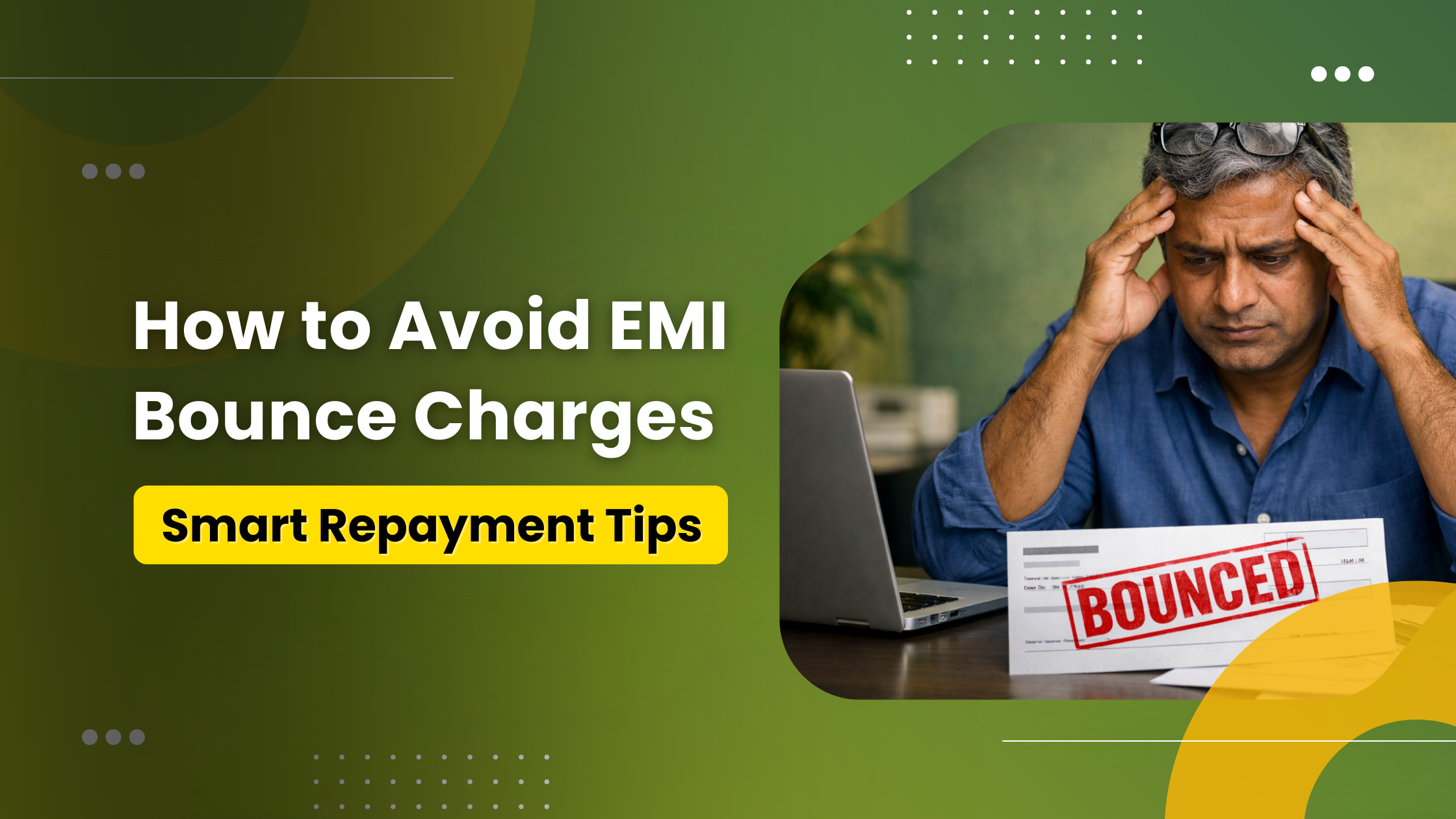
How to Avoid EMI Bounce Charges: Smart Repayment Tips

You may pay more than you anticipate to miss an EMI payment. EMI bouncing payments do not only impose additional fees on your loan, but they can also harm your CIBIL credit score and future loan application. It is important to know the reasons behind EMIs bouncing, the interest charged by the lender, and what effect it has on your credit profile to plan your money wisely. This tutorial defines the term EMI bouncing in straightforward language and gives useful ideas on how to prevent them and still have a good credit score.

What are EMI Bounce Charges?

Whenever you borrow or use a credit card, you must know that EMI bounce charges are the penalty or late fees applied by the bank or financial institutions like NBFCs, especially when your chosen Equated Monthly Instalment (EMI) payment fails due to multiple reasons. This might happen due to multiple reasons, like insufficient balance in your bank account when it is supposed to be debited,  due to expired debit mandates, or other technical issues, especially while implementing auto-debit.

EMI bounce charges are applied, and it acts as a penalty for the failure in payment and lenders’ delayed repayments. Apart from the applied financial penalty, an EMI bounce can also affect your credit score, as your credit score is hampered or falls. It can create difficulties in future financial assistance, like loan approvals. So, with a keen understanding of EMI bounce reasons, tips to improve CIBIL score, and their consequences, you can avoid penalties and additional costs.  

Reason for EMI Bounce

EMI bounce generally occurs when you have insufficient balance in your linked bank account, or you have added incorrect bank details. It can also happen due to inactive auto-debit mandates or due to some technical errors at the bank’s end as well.

Amount of EMI Bounce Charges

The applicable charges can vary from lender to lender. Generally, banks charge an amount between ₹300 and ₹1,000, including applicable GST, on each bounced EMI. For more details, you can check the terms and conditions. Because it is explicitly mentioned there.

Impact on CIBIL Score

Whenever an EMI bounce is reported to credit bureaus by your lender, especially after a payment default, it can lower your CIBIL score. And when there are repeated bounces have a more severe negative impact on your creditworthiness.

Additional Late Payment Penalties

As per the bounce charges, the lenders may also apply late payment fees or interest for your delayed EMI, and it can increase your overall repayment amount also.

Effect on financial assistance, like Loan Approvals

If you are frequently delaying the EMI bounces, it can affect your credit score and poor repayment behaviour, which may lead to loan rejection or higher applicable interest rates in the future. 

Smart Repayment Tips

Considering the delay in repayment, you can enhance and improve the chances of repayment in different ways. There are multiple tips, such as maintaining sufficient balance in the account. For better repayment options, you can also select the loan consolidation, especially to avoid failure in repayment due tomultiple loan available. Some essential tips are as follows:

1. Maintain Sufficient Balance: If you have selected e-natch or e-mandate, you must maintain a sufficient balance in your account. However, while borrowing, you must check the repayment status as well.

2. Select the loan consolidation: If you have borrowed multiple loans, and you are not able to maintain the repayment on time, you can select a loan consolidation option. 

3. Keep a reminder for payment: For avoiding late payment, you can select the reminder options, which help you accomplish the repayment easily. 

Tips to improve CIBIL score

A good CIBIL score is always essential, especially when you want easy approval for personal loans, home loans, credit cards, or any other financial support. Since all the lenders use your CIBIL score to get the financial and transactional history, i.e., your creditworthiness.  In such cases, some effective tips to improve CIBIL score help you enhance your score. If your CIBIL score is low or average, with some effort, you can improve it with good financial habits and smart credit management. Some specific tips are as follows. 

Pay all Your EMIs on Time

A timely repayment of EMIs and credit card bills is the essential factor in improving your CIBIL score. Any single missed payment can affect your score. So, always set the reminders. Enable auto-debit to avoid any delays in repayment.

Maintain a sufficient Credit Utilisation Ratio

Always try to use less than 30% of your credit limit. High credit utilisation, especially more than your limit cause overdependence on credit. It can also lower your credit score.

Avoid Applying for Multiple Loans at Once

Every loan or credit card application is accomplished after checking your credit score, and it can hamper your CIBIL score.

Check Your CIBIL Report Regularly

It often happens that errors in your credit report, such as incorrect personal details or wrongly reported late payments, can affect your score.

Repay Outstanding Debts on time

If you have any pending dues, always focus on making repayment. Clearing the outstanding bills on time can enhance your credit score.

What is loan settlement vs loan closure?

Loan settlement and loan closure look similar, but there are differences in the loan settlement and loan closure. The loan settlement can be accomplished when you have to negotiate whether to get a reduced interest rate, or while paying the loan after defaults, etc. 

Whereas a loan closure can be done as per the customer’s choice, and it is always mentioned in the loan agreement. However, there are some differences in getting a loan settlement vs loan closure.

Conclusion

A personal loan always helps you ensure a good credit score and financial assistance. But, sometimes it happens that your missed repayment can affect your credit score. To avoid EMI Bounce Charges, you can implement all those good practices in your repayment. Because once you repay on time, you can avoid all the chances of losing your credit score as well.  You must include and follow the tips to improve CIBIL score, for maintaining a good credit score. So, always borrow as per your need and repay the loan on time.

Frequently Asked Questions (FAQ)

What are EMI bounce charges, and why are they applied?

EMI bounce charges are applied as penalty fees, which is applied by banks or NBFCs when your EMI payment fails.

EMI bounce charges vary from lender to lender. Generally, banks and NBFCs charge between ₹300 and ₹1,000, along with applicable GST.

Yes, an EMI bounce can impact your CIBIL score. When lenders report missed or delayed payments to credit bureaus, your score may drop.

You can avoid EMI bounce charges by maintaining a sufficient balance in your bank account. To improve your CIBIL score, always pay EMIs on time.

Loan settlement happens when a borrower negotiates with the lender to pay a reduced amount, generally after default. Loan closure, on the other hand, means repaying the full loan amount as per the agreement.

Disclaimer

The information provided in this blog is for general informational purposes only and should not be considered financial, legal, or professional advice. EMI bounce charges, penalties, interest rates, and credit score impacts may vary depending on the lender, loan type, and applicable terms and conditions. Readers are advised to carefully review their loan agreements and consult with their bank, NBFC, or a qualified financial advisor before making any financial decisions. The publisher does not guarantee accuracy, completeness, or outcomes based on this content.

Author

  • Finance Expert

    Saurabh Jha is a technical graduate and seasoned writer, and he has been working as a content writer and research scholar. With more than five years of writing experience in fintech, finance, arts and humanities.

Saurabh Jha

Saurabh Jha is a technical graduate and seasoned writer, and he has been working as a content writer and research scholar. With more than five years of writing experience in fintech, finance, arts and humanities.

Leave a Reply

Your email address will not be published. Required fields are marked *